

As organizations face the reality that they can no longer hold tight to their deeply embedded legacy software, they are met with a new wave of options. Many of these claim that they are “cloud-native”. In reality, most of these platforms are only “cloud-enabled”.
Now this might invoke the question of “What’s the difference, and how will it affect our operations?”.
To help you recognize the key differentiators, we’re breaking down some of the characteristics of a true cloud-native platform compared to a cloud-enabled and why it matters for investment operations.
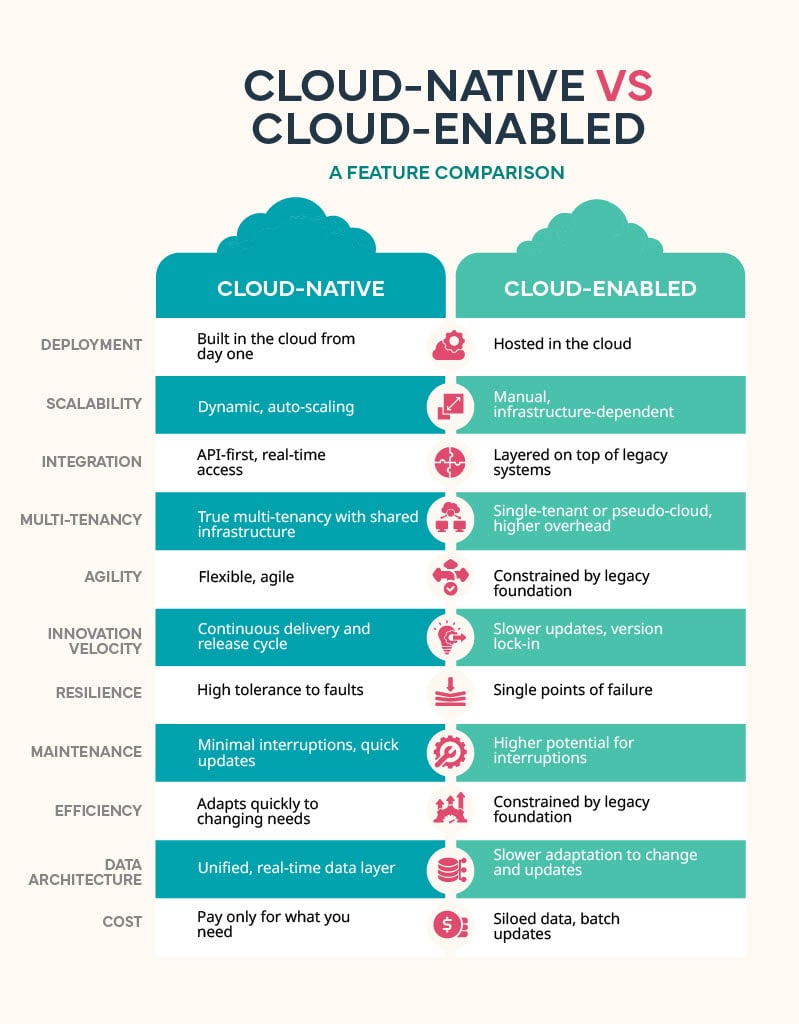
In the world of investment accounting, agility, resilience, and scalability aren’t just nice to have. They are non-negotiables. Unlike cloud-enabled systems that often carry the baggage of legacy infrastructure, cloud-native solutions are purpose-built for flexibility and speed. Equally important is the resilience that cloud-native architecture provides.
With features like automated failover, real-time data redundancy, and self-healing capabilities, these platforms minimize operational risk and downtime which is critical in an environment where every second counts.
Legacy systems can’t deliver the speed, resilience, and flexibility that today’s operations require, but not all cloud solutions are created equal. Understanding the difference between cloud-enabled and cloud-native can be the difference between modernizing and merely migrating.
For the future of your operations, architecture matters. Make your choice count. Get in touch to learn more.
Related Reading
Cloud-Enabled vs. Cloud-Native, Know the Difference
Fund Investment Management, Cybersecurity and the Cloud