New Whitepaper
How to implement AI as asset managers, asset servicers and asset owners and why architecture is the key decider of what AI can deliver.

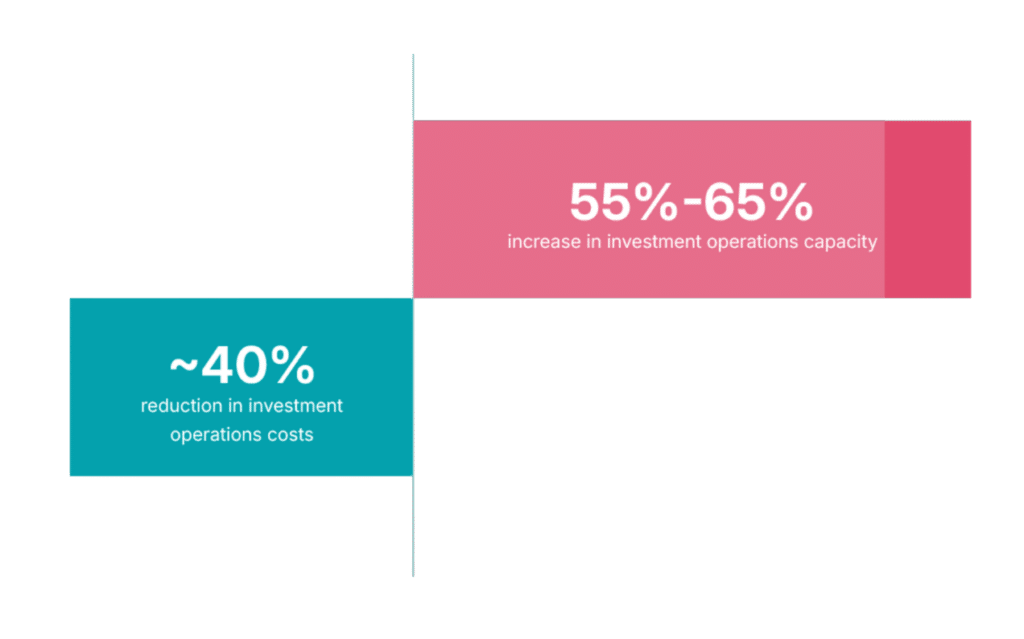
BCG’s 2026 Global Asset Management Report found that agentic AI could increase investment operations capacity by 55 to 65% and cut operational costs by around 40%.¹ Capturing any of it, the same report says, means redesigning the operating model rather than automating today’s processes.
AI promises a lot and delivers less than firms expect and the reason is the architecture underneath it. Feed a capable model stale, fragmented, overwritten data and it will do as much as your current architecture allows, which is to find yesterday’s problems tomorrow.
¹ Boston Consulting Group, “Rebuilding Asset Management for an AI-First World,” Global Asset Management Report 2026 (April 2026),
Legacy batch systems were built for a world where the answer arrived at six the next morning. That design caps what any model running on top of it can deliver:
AI added afterwards can only evaluate what already happened. This flaw shows up a year into production, when your AI systems turn out to be running on the very same architecture your firm was trying to replace.
| Legacy batch architecture | Event-driven architecture | |
|---|---|---|
| When data updates | Once a day, after the overnight cycle completes | As each trade, price, cash movement and corporate action lands |
| What AI can see | Yesterday’s state, after the NAV is already struck | Current state, while the accounting is still happening |
| When problems surface | The morning after, once processing finishes | As they occur, before they propagate into the books |
| How corrections are stored | Overwritten, so prior state disappears | Preserved as versioned events with full lineage |
| Reasoning across asset classes | Bounded by the silo each model sits in | Across one dataset spanning public, private and digital |
| What AI can do | Evaluate outcomes after the fact | Catch, explain and resolve while it still matters |


One fund administrator cut operational labor costs by nearly 50% after deploying AI-driven anomaly detection and exception reporting across a unified data platform
When intelligence runs inside the engine rather than added afterwards, four things change in how operations actually run:

While assets are grown, profitability is not.
Global AUM is projected to rise from $139 trillion to $200 trillion by 2030. Over the same period, profit per AUM will have fallen by more than a quarter from its 2018 level.
Capturing the prize AI can truly deliver depends on a foundation built for continuous, event-driven, cross-asset operations. The foundation needed to achieve AI-empowered growth and operations is the subject of this whitepaper.


Source: PwC, “2025 Global Asset & Wealth Management Report,” November 2025.

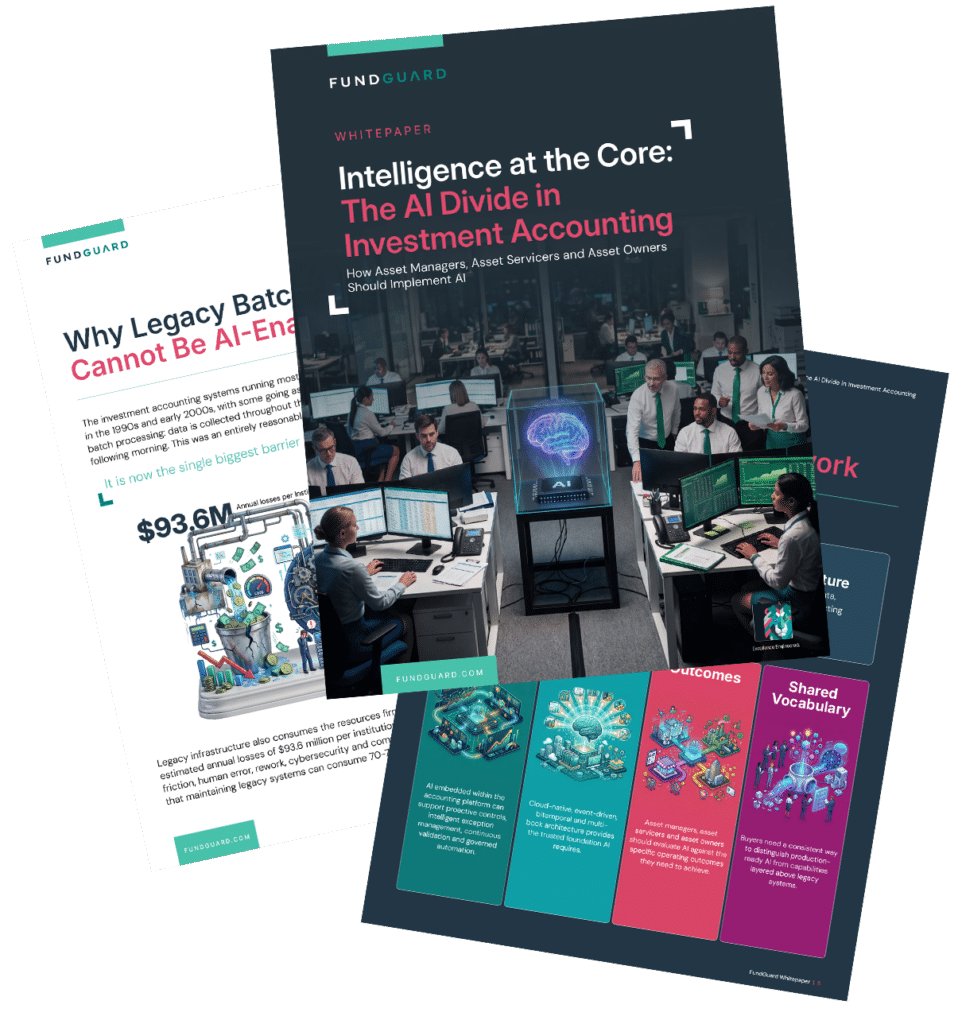

FundGuard is a real-time investment operations and accounting platform built to serve as a single system of record across all public, private and digital assets and all product structures while supporting the full investment lifecycle, from middle-office investment operations through fund accounting, trustee, depository and custody services. With FundGuard, firms can reduce operational fragmentation, automate workflows and establish the trusted data foundation required for AI-enabled operations.
This whitepaper lays out what AI-ready architecture requires, but a demo will show you how FundGuard’s unified platform delivers real-time oversight, embedded intelligence and a single system of record across every asset class.
Industry Certified